

Most B2B content leaders start their agency search by asking the wrong question: “Who gets the best results?” A better question is: “Which agencies can be held to specific, contractual definitions of what ‘results’ means?” This guide gives you the 12 criteria, the benchmarks, the contract language, and the red flags you need to make that evaluation confidently—before you sign anything.
Why Choosing the Wrong Production Agency Costs More Than Money
The wrong agency is a momentum problem, not just a budget problem. A misaligned production partner costs you calendar time with executives, erodes your internal credibility with leadership, and hands you a polished audio file with no attached business outcome. By the time you realize the fit is off, you’ve often sunk six months of retainer, an onboarding sprint, and two or three lackluster episodes into the relationship.
Industry observers note that the wrong production partner can cost “thousands of dollars and months of wasted momentum — before you’ve published a single compelling episode.” That is not hyperbole. It is the median outcome when buyers skip a structured evaluation process.
The good news: most of the failure modes are predictable and avoidable. The market is flooded with agencies promising studio-quality audio, explosive audience growth, and guaranteed leads. The agencies that can deliver on all three for a B2B audience—where the ICP is a VP of Engineering or a CFO, not a casual listener—are a shorter list. This framework helps you find them.
One additional dimension that gets almost no attention in standard reviews: research shows that companies with branded podcasts achieve 89% higher brand awareness and 57% higher brand consideration—but only when the show reaches the right audience consistently. An agency that lacks B2B-specific editorial judgment will optimize for metrics that don’t translate to pipeline. That gap is what this checklist is designed to close.
12 Evaluation Criteria for B2B Podcast Production Agencies

1. Production Quality Standards and Audio Benchmarks
Production quality is table stakes, not a differentiator—but agencies still vary enormously in what “professional audio” means to them. The benchmark to use: finished episodes should be mixed and mastered to -16 LUFS for stereo or -19 LUFS for mono, meeting Apple Podcasts and Spotify loudness normalization standards. Audio should be recorded at a minimum of 44.1 kHz/16-bit (studio-standard is 48 kHz/24-bit), with individual multitrack stems so each speaker can be edited independently in post.
Ask for a raw recording sample before you sign. Any agency producing B2B shows at scale should be able to share a pre-edited episode stem alongside the finished version. If they can’t—or won’t—that’s a scope transparency problem. Also ask whether their audio engineers are in-house or outsourced. Outsourced editing introduces quality variation and slower feedback loops, both of which become problems the moment your show ships on a weekly cadence.
Contract language to look for: “All delivered episodes will conform to [platform] loudness standards and be provided as stereo WAV at 44.1 kHz minimum.” Vague language like “broadcast quality audio” without a decibel or sampling rate reference is unenforceable.
2. Turnaround Times and Workflow Transparency
Turnaround time is the single most underweighted criterion in most agency evaluations—until you miss a publish date. Industry guidance is clear: “Miss a week of publishing, and you lose listener momentum. Miss a month, and your platform algorithm rankings take a real hit that can take months to recover from.” For a B2B show on a weekly schedule, the agency should be able to guarantee episode delivery within 5–7 business days of receiving the raw recording.
The best agencies operate with documented production workflows, not tribal knowledge. Ask for a visual process map, not a verbal description. If the agency uses a project management tool (Asana, ClickUp, Notion), they should be able to share a read-only view of the episode pipeline during the demo. If they can’t show you where your episode is at any given moment, you will be chasing status updates via email every week.
Contract language to look for: “Agency will deliver edited draft episodes within [N] business days of receipt of raw files. Client has [N] business days to submit revision requests, with a maximum of [N] revision rounds per episode.” Turnaround commitments without a revision clause create a loophole that causes delays on your side of the table, not theirs.
3. Remote Recording Infrastructure for Executive Guests
Executive guests don’t install software. This sounds obvious, but it eliminates dozens of platforms from consideration. Your agency’s remote recording stack needs to be browser-based, require zero guest-side downloads, and capture local audio tracks independently from the internet connection quality. That rules out raw Zoom recordings as a primary production input for any show that cares about audio quality.
Among the leading platforms, Riverside.fm is considered best overall for local 4K recording and reliable multi-track output, while SquadCast (now integrated into Descript) is a strong choice for transcript-based editing workflows, and Zencastr is the strongest all-in-one option for recording, hosting, and distribution. Each of these platforms captures audio locally on each participant’s device before uploading, which means a bad internet connection on your guest’s end doesn’t wreck the recording.
For B2B shows targeting senior executives, the agency should also provide a pre-session tech check protocol. That means a green-room call or a brief async test—not a 2-minute hope. Ask specifically: “What does your guest onboarding look like for a first-time executive guest who has never recorded a podcast before?” The answer tells you how much white-glove coordination you’re actually getting.
Contract language to look for: “Agency will conduct a pre-session technical check for each guest prior to their first recording. Sessions will be recorded using local-capture technology with individual audio tracks per participant.” If the contract says “recordings will be conducted via video conference platform,” push back until the specific platform and local-recording methodology are named.
4. Post-Production Capabilities and Editing Standards
Post-production is where amateur shops and professional agencies diverge most visibly. A full-service B2B post-production workflow should include: noise removal and room correction, multi-track leveling and compression, music intro/outro production and placement, filler-word removal (calibrated, not aggressive—over-editing makes executives sound unnatural), chapter markers, transcript creation, and at minimum a first-pass show notes draft. Production services often include dedicated producers and project managers, audio editing, professional mixing and mastering, studio and remote recording, sonic branding, scripting, and show notes.
The benchmark that separates competent from exceptional: ask whether the agency uses AI-assisted editing tools like Descript or Adobe Podcast Enhance as a baseline layer, then applies human editorial judgment on top. Agencies that are purely AI-automated will miss the contextual errors (a guest stuttering over a key point, a music sting that overwrites a sentence) that harm brand perception. Agencies that are purely manual are too slow and expensive to scale to a weekly cadence.
Contract language to look for: “Post-production will include [specific named deliverables] completed by [named role: e.g., senior audio engineer] and reviewed by [named QA step] before client delivery.” Generic references to “full editing” without a scope checklist mean different things to every agency.
5. Content Repurposing and Multi-Format Deliverables
Repurposing is where production agencies either become content engines or stay audio shops. For a B2B program with any real marketing ambition, the right agency should extract 3–5 key moments from each episode into 30–90 second video clips for LinkedIn and other channels—not as a premium add-on, but as part of the base workflow. Every interview recording already contains those moments. The question is whether the agency has the editorial judgment to identify them and the design capacity to produce them at volume.
A smart content strategy turns each episode into blog posts, LinkedIn clips, YouTube videos, and more—and this kind of repurposing is what gives a B2B podcast its downstream commercial value. The episode itself is the seed asset. Your agency should be able to articulate and deliver the harvest.
The minimum viable repurposing stack for a B2B show: audiograms or video clips (minimum 2–3 per episode), a full episode transcript, SEO-optimized show notes (800–1,200 words, not 100-word summaries), social copy for LinkedIn and email distribution, and a guest-shareable asset. Agencies that charge separately for each of these—without bundling them into a base retainer—are almost always going to drive scope creep by month two.
Contract language to look for: An explicit deliverables list per episode, formatted as a table or checklist, with word counts, asset dimensions, and delivery formats specified. “Content repurposing support” as a line item with no further detail is a scope liability.
6. Pricing Structure and Contract Flexibility
Convert every proposal into cost per shipped episode before comparing agencies. Two proposals at the same monthly retainer can represent wildly different per-episode value depending on publish frequency, revision allowance, and included deliverables. The current market rate for full-service B2B podcast production ranges from roughly $2,000–$5,000+ per month for premium B2B agencies offering ROI tracking and executive-level strategy, while production-only editing runs $200–$600 per episode. Anything below that range should trigger questions about scope, not celebration about budget efficiency.
The right framing: B2B podcast production should be priced like strategic consulting because the best providers deliver relationship engineering, pipeline development, and partnership acceleration—not just polished audio files. When you compare at cost-per-episode, make sure the denominator includes all episodes actually published in a given month, not episodes theoretically available under the contract.
On contract structure: most top agencies will ask for a three-to-six-month minimum term, though this is sometimes negotiable. A six-month minimum is reasonable—podcasting compounds slowly and short-term engagements rarely produce enough data to evaluate strategy. A 12-month lock-in without a performance clause or exit provision is a risk worth pushing back on. Ask for a 30-day written termination clause after an initial committed period, with IP ownership of all published episodes reverting to you on cancellation.
Contract language to look for: “Client retains full ownership of all produced episodes, transcripts, and associated content upon delivery and payment. Contract may be terminated with [30-day] written notice after [initial term] has been fulfilled.” Agencies that own your episode files until termination have negotiating leverage you don’t want them to have.
7. Experience with B2B Audiences and Enterprise Guests
B2B and B2C podcast production require fundamentally different editorial instincts. Strategies for generating a return on podcast investment vary massively between B2B and B2C—B2B podcasting targets a small, specific audience and should focus on building relationships with guests, not maximizing total download volume. An agency that built its reputation on consumer lifestyle shows will optimize for the wrong outcomes in a B2B program.
The specific indicators to look for: Does the agency have active client shows in your vertical or adjacent verticals? Can they share examples of episodes that feature C-suite or VP-level guests from enterprise companies? Do they understand what “ICP-matched guest booking” means, or do they default to social media follower count as a proxy for guest quality? The right agency should talk fluently about your sales cycle, average contract value, referral sources, and strategic partnerships—not just about microphones and mixing.
Ask for three client references at or above your target company size. Don’t skip the reference calls. Listen specifically for whether the agency understood the client’s ICP before they booked a single guest—or whether they started booking and adjusted retroactively.
Contract language to look for: “Agency will develop and maintain a written Ideal Guest Profile (IGP) aligned to Client’s ICP prior to the first guest booking cycle.” Agencies that treat all guests as equal don’t understand why B2B podcasting works.
8. Client References and Portfolio Quality
When evaluating potential podcast production companies, request specific examples of successful campaigns and, if possible, ask for data on key performance indicators such as listener growth, engagement metrics, and conversion rates. Portfolio review is non-negotiable. Listen to at least three episodes from each finalist agency’s active client shows—not a highlight reel they curate, but random episodes from the last 60 days of their most comparable B2B client.
What you’re evaluating in the listening audit: Does the audio sound clean and consistent, or does it vary episode to episode? Are the show notes substantive and keyword-rich, or clearly written by someone who didn’t listen to the episode? Do the social clips they publish feel organic or like graphic templates with text slapped on? Does the host sound coached and confident, or stilted and over-produced?
On case studies: vague promises about “explosive growth” or “Hollywood-level production” without concrete client case studies or verifiable results are a major red flag. Ask specifically for case studies that include before/after listener data, episode completion rates, and any pipeline or revenue attribution the client was willing to share. Agencies that can’t produce a single example with real numbers are selling outcomes they can’t yet deliver.
Questions for reference calls: “Did the agency deliver against its committed timeline every month?” / “Were there any scope disputes? How were they resolved?” / “Would you renew with this agency if you were starting over today?”
9. Technology Stack and Platform Integrations
The agency’s technology stack directly determines how well their operations integrate with yours. A modern B2B podcast production stack should include: a browser-based remote recording platform (Riverside, Squadcast/Descript, or Zencastr), AI-assisted editing (Descript or Adobe Podcast Enhance), a podcast hosting platform with RSS analytics (Buzzsprout, Transistor, or Captivate), a project management layer visible to the client, and a dedicated asset delivery system—not a Google Drive folder with inconsistent naming conventions.
More importantly for B2B marketing teams: does the agency integrate with your existing MarTech? The ability to connect episode data to HubSpot, Salesforce, or your ABM platform is what makes podcast attribution possible. Podcast content doesn’t stop at the episode—it fuels revenue, boosts visibility, and strengthens brand recall, but only when you can see the signal inside the same system your revenue team uses to track pipeline.
Questions to ask: “What podcast analytics platform do you use, and can we connect it to our CRM?” / “What project management tool do you use, and do we get client access?” / “How do you handle file delivery—and what is your naming convention for episode assets?” If the answer to the last question involves a shared Google Drive with files labeled “final_FINAL_v3,” move on.
10. Team Structure and Dedicated Support
The person who sells you the engagement is almost never the person who produces your show. This is the single biggest source of disappointment in agency relationships. Ask explicitly: “Who will be assigned to our account, what is their title, and can we meet them before we sign?” You need to know whether you’re getting a dedicated producer or sharing a production assistant with seven other clients.
Agencies like Lower Street assign every client a dedicated team of specialists across production, editing, marketing, and growth—a model that produces more consistent output than generalist pods. For a B2B show with named executive guests, production consistency is a brand quality issue, not just an operational one. Ask what happens to your account if your dedicated producer leaves. Does the agency have documented SOPs that allow reassignment without quality disruption?
Contract language to look for: “Client will be assigned a named Primary Producer and an Account Manager as points of contact. Client will be notified [30 days / within 5 business days] of any changes to the assigned production team.” Agencies that resist naming individuals in the contract are signaling a staffing model that treats accounts as interchangeable—and they treat episode quality the same way.
11. Strategic Input Beyond Production Execution
True full-service B2B podcast production is not execution-only. It includes strategy: editorial calendar planning, episode topic mapping to buyer journey stages, guest sequencing that supports your ABM motion, and quarterly performance reviews that connect podcast activity to business outcomes. A reliable B2B podcast agency will provide performance reports to help you understand your listeners’ demographics, locations, and preferred episodes—but the better agencies go further, using that data to recommend editorial pivots.
The benchmark question to ask during demos: “Walk me through how you’d help a client pivot their show strategy if download growth stalled after episode 20.” Agencies that are purely production-oriented will give you a vague answer about content quality. Agencies with real strategic capability will talk about audience research, topic auditing, distribution channel expansion, and ICP guest recalibration. There is a material difference between the two responses.
Look specifically for agencies that run a formal show strategy session during onboarding—not a 30-minute call to collect your brand guidelines, but a working session to map your editorial calendar to your sales pipeline, define the guest persona, and establish the leading indicators that will signal whether the show is working before the pipeline data matures.
Contract language to look for: “Agency will conduct a quarterly Business Review including [specific named deliverables: e.g., episode performance analysis, guest pipeline review, content strategy recommendations] delivered as a written report.” Vague references to “ongoing strategic support” without deliverable definitions will result in a Slack message, not a strategy session.
12. Measurement and Reporting Capabilities
Downloads are not a B2B business metric. They help diagnose distribution, but they don’t explain revenue impact. A practical ROI dashboard should track interviews completed, follow-ups, introductions, opportunities, closed deals, and lifetime value—because for most B2B firms, the right question is not “How big is my audience?” but “Did this show help me reach the right people?”
At a minimum, the agency should report on: unique listeners per episode, average episode completion rate (benchmark: 60%+ for a well-produced B2B show), subscriber growth month-over-month, top-performing episodes by completion and listener volume, and any available attribution data connecting episode listens to web sessions, form fills, or CRM touchpoints. Agencies that only send a monthly email with total download counts are not doing measurement—they’re doing reporting theater.
B2B podcasts contribute to pipeline through direct attribution (listeners convert via CTAs), influenced pipeline (existing prospects engage deeper), and brand trust acceleration (consistent presence shortens sales cycles). Your agency should have a framework for tracking at least one of these pathways. If they don’t, you will not be able to defend the budget renewal conversation.
Contract language to look for: “Agency will deliver a monthly Performance Report no later than [N] business days after month-end, including [specific named metrics].” Name the metrics in the contract. If it doesn’t specify that episode completion rate, unique listeners, and subscriber growth are included, those metrics are optional—and they’ll be omitted when the numbers aren’t flattering.
12-Criteria Agency Evaluation Scorecard

Use the table below to grade each agency on a 1–3 scale (1 = absent, 2 = partial, 3 = strong evidence) during your RFP process. A minimum passing score of 30/36 indicates an agency ready for a B2B enterprise program. Anything below 24 should be disqualified regardless of price.
| # | Criterion | Minimum Benchmark | What Strong Evidence Looks Like | Score (1–3) |
|---|---|---|---|---|
| 1 | Production Quality Standards | Episodes mastered to -16 LUFS stereo; 44.1 kHz minimum | Can share raw + finished stems; named in-house engineer | |
| 2 | Turnaround Time & Workflow | 5–7 business day delivery SLA in contract | Client-visible project management tool; visual process map on request | |
| 3 | Remote Recording Infrastructure | Browser-based local capture (Riverside, Squadcast, or Zencastr) | Documented executive guest tech-check protocol | |
| 4 | Post-Production Capabilities | Named scope checklist per episode; AI + human editorial layer | Shows before/after editing samples; QA step in contract | |
| 5 | Content Repurposing Deliverables | Minimum: 2 clips, transcript, 800-word show notes, social copy | All deliverables explicitly listed per episode in contract | |
| 6 | Pricing Structure & Contract Flexibility | Monthly retainer $2K–$5K; max 6-month initial term; IP reverts to client | Per-episode cost fully loaded; 30-day exit after initial term | |
| 7 | B2B Audience & Guest Experience | Active B2B client shows; understands ICP-matched booking | 3 references at or above your company size; named vertical expertise | |
| 8 | Client References & Portfolio | 3 auditable client episodes from last 60 days; at least 1 case study with metrics | References answer renewal question affirmatively; real performance numbers shared | |
| 9 | Technology Stack & Integrations | Named recording, editing, hosting, and PM tools; client access to PM | CRM or analytics integration capability; documented file naming convention | |
| 10 | Team Structure & Dedicated Support | Named Primary Producer; team change notification clause | Meet producer before signing; documented SOPs for team continuity | |
| 11 | Strategic Input Beyond Production | Formal onboarding strategy session; quarterly business review | Can walk through editorial pivot scenario; pipeline-linked leading indicators | |
| 12 | Measurement & Reporting | Monthly report with named metrics; completion rate included | Attribution framework beyond downloads; CRM touchpoint tracking possible |
5 Red Flags That Should End the Conversation

No matter how polished the pitch deck, any one of these signals indicates a fit problem that will not resolve itself post-signature.
Red Flag 1: Undefined Deliverables in the Proposal
If a proposal references “full-service podcast production” without a line-item deliverables list, you are looking at a scope dispute waiting to happen. “Full service” is one of the most elastic phrases in the podcast industry. It can mean a finished audio file and an RSS submission, or it can mean 15 distinct deliverables per episode. If an agency cannot—or won’t—define every deliverable before you sign, assume the scope is intentionally vague. Ask for a deliverables matrix in writing. If they push back, that is your answer.
Red Flag 2: Guest Booking Described as “Outreach Support” Rather Than a Defined Service
Guest pipeline management is operationally distinct from production, and agencies that bundle it loosely under “show management” will underdeliver on it. If an agency cannot clearly separate what guest booking includes—number of pitches per month, criteria for guest qualification, acceptance rate benchmarks, and what happens when a guest cancels within 48 hours of recording—you are paying for vague effort rather than a defined output. Agencies that treat all guests as equal don’t understand why B2B podcasting works. Probe this specifically and insist on a written definition before signing.
Red Flag 3: Reporting That Leads with Download Counts
Downloads are the most overused metric in podcasting. They can show whether people are consuming your content, but they do not tell you whether the right people are listening or whether your show is influencing pipeline. An agency that leads its monthly reporting with total downloads—without contextualizing them by completion rate, subscriber trend, or audience quality—is not doing B2B measurement. It is doing vanity metric theater. Ask what metrics they report on besides downloads. If the list is short, the agency is not analytically mature enough for an enterprise program.
Red Flag 4: No Named Point of Contact in the Contract
If the agency won’t name the producer assigned to your account in the contract—or says it will be “assigned post-onboarding”—you are accepting a bait-and-switch risk. Sales calls are run by senior staff. Production is often handed to junior coordinators or offshore contractors. Insist on meeting your production team before signing, and insist that the named individuals are referenced in the contract with a notification clause if they change. An agency that resists this is telling you something about how they staff accounts after the deal closes.
Red Flag 5: Lock-in Without Performance or Exit Provisions
A 12-month contract with no performance clause and no exit provision is not a partnership agreement. It is a client retention device. Reasonable agencies—especially those confident in their delivery—accept a 30-day written termination clause after an initial committed period of three to six months. They should also be willing to include a basic service level agreement: if turnaround times are consistently missed or episode quality falls below agreed standards, the client has contractual recourse. If an agency refuses both provisions, they know their retention isn’t earned by results.
Questions to Ask During Agency Demos
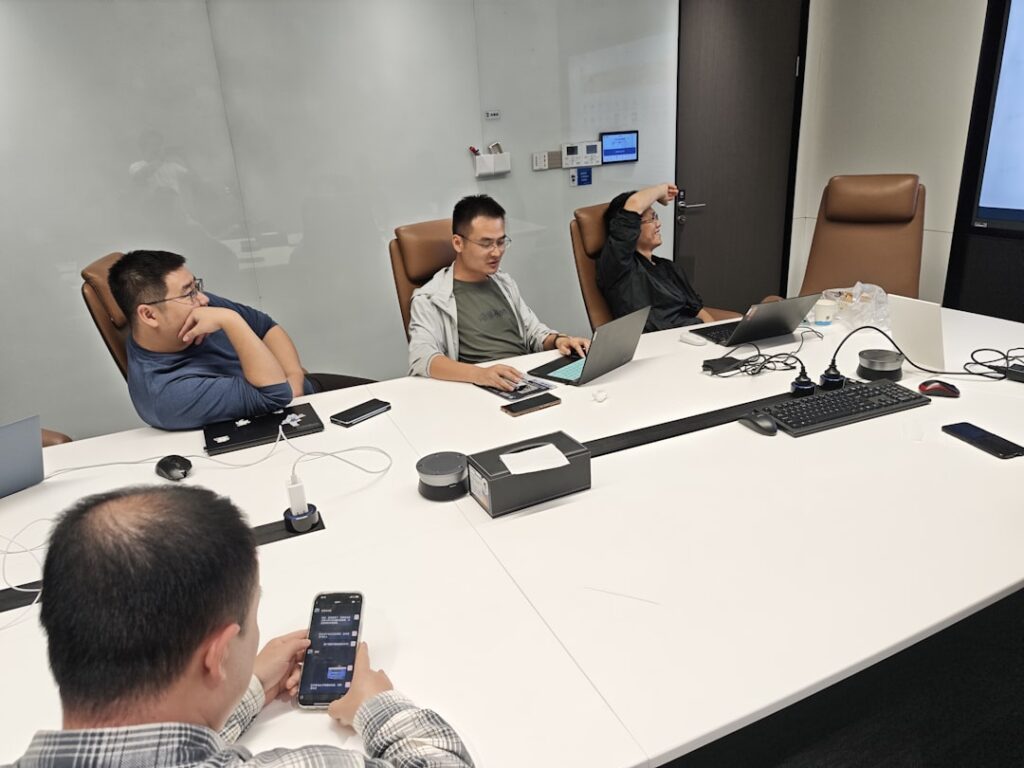
Use the demo to pressure-test claims made in the proposal. Proposals describe the ideal state. Demo conversations reveal how the agency thinks when they’re not prepared for a question.
On Scope and Process
“Show me an example deliverables checklist from a current client’s most recent episode—redacted if needed.” This is the fastest way to verify whether their written scope matches their actual output. “Walk me through what happens between the moment I submit a raw recording file and the moment the finished episode lands in my inbox.” Listen for named tools, named roles, and specific days. Vague answers indicate undocumented processes.
On B2B Specificity
“Tell me about a B2B client show in [your vertical or adjacent vertical] and what their biggest operational challenge has been.” The quality of the answer reveals depth of B2B experience faster than any portfolio review. “How do you define a high-quality guest for a B2B show targeting [your ICP]?” If the first factor they name is social following, audience size, or media appearances, you’re talking to a team optimized for B2C outcomes.
On Measurement and Attribution
“If our episode completion rates drop by 20% over three consecutive episodes, what’s your diagnostic and response process?” Strong agencies have a defined answer. Average agencies say “we’d look into it.” “Can you connect podcast listener data to our HubSpot [or Salesforce] instance?” This is a concrete technical question—the answer is yes, no, or partially. If it’s “we’d have to look into that,” the analytics capability is not mature enough for an enterprise program.
On Team and Contract
“Who specifically would be the primary producer on our account, and can we meet them today?” This question alone filters out agencies running a bait-and-switch model. “What is your 30-day process for onboarding a new B2B client show from zero to first published episode?” Strong agencies have a documented answer. Vague answers signal reactive operations that will rely on your team to fill the gaps.
How to Score Agencies Using This Framework
Run every finalist through the same scorecard to eliminate anchoring bias—the tendency to favor the first agency you spoke to, or the one with the best pitch deck. Score each of the 12 criteria on a 1–3 scale during and immediately after the demo, before comparing across agencies. Then apply the disqualification filter: any agency that earns a 1 on criteria 1 (audio quality), 6 (IP and contract flexibility), or 10 (named team structure) should be removed from the shortlist regardless of their total score.
| Score Range | Interpretation | Recommended Action |
|---|---|---|
| 33–36 | Enterprise-ready agency with strong operational evidence | Proceed to contract negotiation; focus on scope definition and IP language |
| 28–32 | Capable agency with addressable gaps | Surface specific gaps; ask for contractual remedies on weak criteria before signing |
| 24–27 | Emerging agency or B2C-dominant shop | Consider only for pilot-phase or low-stakes show; revisit in 6 months |
| Below 24 | Misaligned with B2B program requirements | Disqualify; do not negotiate scope remedies for foundational capability gaps |
One final principle: normalize every proposal to a single unit of comparison—cost per shipped episode, fully loaded with all deliverables included. Two agencies at $4,000/month look identical until you realize one ships four episodes monthly and the other ships two. The cost per episode delta is what matters for budget defense conversations with leadership, not the retainer total.
After scoring, run a final gut check: does this agency talk more about their process or about your business outcomes? The best B2B podcast production partners lead with the outcome—pipeline, guest relationships, brand authority in a specific vertical—and let the process questions follow. Agencies that lead with their technology stack, their proprietary editing workflow, or their award history are optimizing for the pitch, not the program.
See Our Reviews of Top Production Agencies
This framework is most useful when applied to a curated shortlist of vetted agencies—not a cold search that returns a mix of consumer hobby shops and enterprise partners. At PodCastAgencyReviews, we evaluate B2B podcast production agencies against these exact criteria, with scoring transparency and client reference verification built into every review. If you’re ready to compare your top candidates against a benchmark, or you’re starting a shortlist from scratch and want to skip the cold research, explore our full directory of reviewed production agencies. Each profile includes scope definitions, pricing transparency ratings, B2B specialization evidence, and verified client feedback—so you can apply this scorecard to agencies that have already cleared a first-pass filter. Visit PodCastAgencyReviews to start comparing your options with the confidence that comes from a structured, criteria-driven evaluation.
Frequently Asked Questions
What is the difference between a B2B podcast production agency and a podcast booking agency?
A podcast production agency builds and manages your own show—handling recording, editing, post-production, distribution, and strategy. A podcast booking agency secures guest appearances for you or your executives on other people’s shows. Some full-service B2B agencies do both, but the scope, pricing, and success metrics are distinct. If an agency bundles both services, require separate line-item definitions for each in the contract before signing.
How long should a B2B podcast production contract be?
A three-to-six-month initial committed term is reasonable. Podcasting compounds slowly, and short engagements rarely produce enough data to evaluate strategy effectiveness. A 12-month lock-in without a performance clause or exit provision is a risk worth pushing back on. Aim for a 30-day written termination clause that activates after the initial committed period, and verify that all episode IP reverts to you upon cancellation and payment.
What should a B2B podcast production agency charge per month?
Full-service B2B podcast production retainers typically range from $2,500 to $5,000 per month for a complete program including strategy, production, and multi-format deliverables. Production-only editing runs $200 to $600 per episode. Convert every proposal to a fully loaded cost per shipped episode—including all deliverables—before comparing agencies. Proposals at the same monthly rate can represent very different per-episode value depending on publish frequency and included assets.
What metrics should a B2B podcast production agency report on?
At minimum: unique listeners per episode, average episode completion rate (benchmark is 60%+ for a well-produced B2B show), subscriber growth month-over-month, and top-performing episodes by completion rate. Strong agencies also track attribution data connecting episode listens to web sessions, demo requests, or CRM touchpoints. Downloads alone are not a B2B business metric—they do not tell you whether your ICP is listening or whether the show is influencing pipeline.
What are the biggest red flags when evaluating a B2B podcast production agency?
Five red flags to watch for: (1) deliverables described as ‘full-service’ without a written line-item list, (2) guest booking described as vague ‘outreach support’ rather than a defined monthly output, (3) reporting that leads with download counts and no completion rate or audience quality data, (4) no named producer assigned to your account in the contract, and (5) a 12-month lock-in with no performance clause or exit provision after an initial committed period.